19 Aug 2026
Mapping Compliance Routes for Digitized Classic Table Games Across Jurisdictions

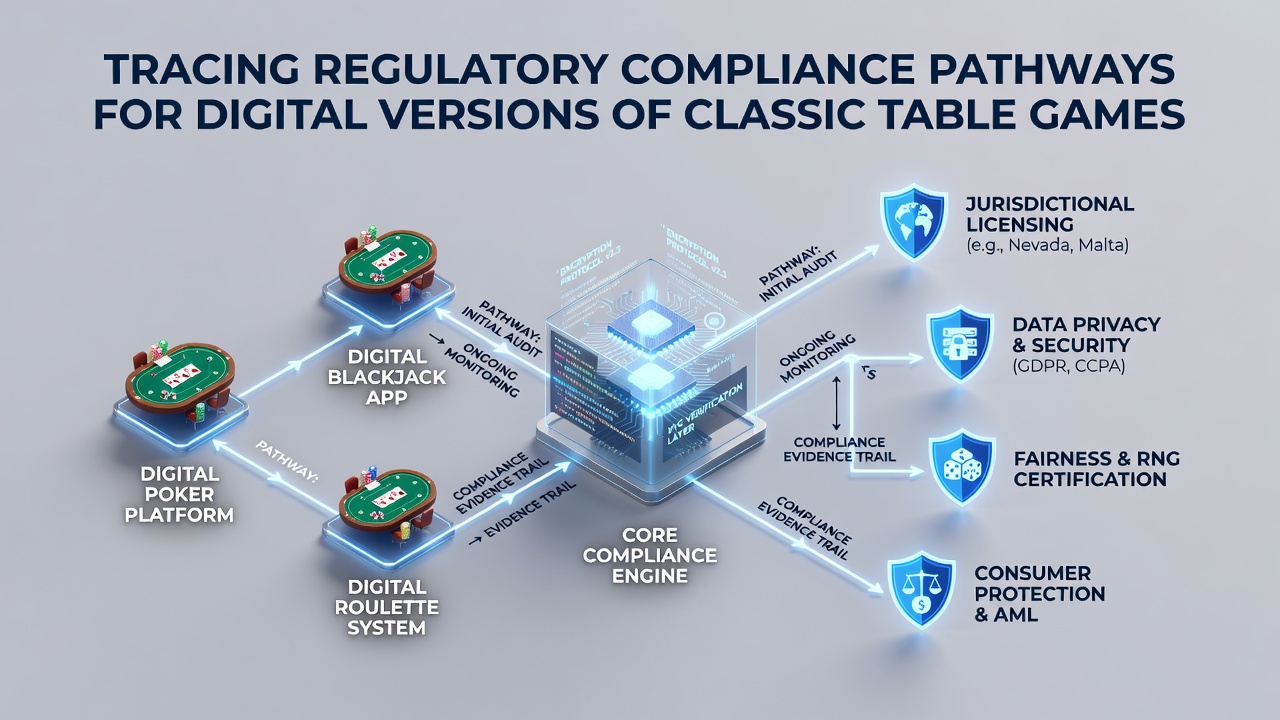
Digital adaptations of classic table games such as blackjack, roulette and poker follow structured regulatory pathways that vary by region, yet share common threads around fairness testing, licensing and ongoing audits. Observers note that these pathways begin with software certification and extend through operator licensing, with data from industry reports indicating that approval timelines often stretch from six to eighteen months depending on the jurisdiction.
Researchers discovered that core requirements include random number generator validation, game mathematics review and responsible gambling integrations, while those who've studied this know the process also demands clear rules disclosure and player fund segregation. In practice, developers submit game code to accredited testing labs, which then issue reports that regulators review before granting market access.
Initial Certification Steps for Digital Table Game Software
Certification forms the first major checkpoint, and experts have observed that labs evaluate everything from payout percentages to anti-cheating measures before any game reaches players. Data shows that in North America, states like New Jersey and Pennsylvania require third-party testing against standards set by the state gaming control boards, whereas European markets reference technical specifications from national authorities. One study revealed that failure rates on first submission hover around thirty percent, primarily due to incomplete documentation or RNG inconsistencies.
But here's the thing: once certified, the software receives a unique identifier that regulators track across updates, which means even minor patches trigger re-evaluation in many jurisdictions. Those who've navigated these processes often discover that maintaining version control records becomes essential for audits.
Regional Differences in Licensing and Oversight
Licensing pathways diverge sharply by geography. In the United States, tribal and state compacts dictate how digital table games integrate with existing frameworks, while Canada’s provincial regulators such as the Alcohol and Gaming Commission of Ontario emphasize player protection metrics in their approval criteria. Australian authorities, through bodies like the Northern Territory Racing Commission, focus on advertising restrictions and harm minimization tools alongside technical compliance.
According to figures from the American Gaming Association, regulated digital table game revenue in compliant markets grew steadily through 2025, with projections extending into 2026. Meanwhile, European operators align with directives from multiple national bodies, creating a patchwork that requires localized adaptations even when core game mechanics remain identical.
Emerging Standards Expected by August 2026
Updates scheduled for August 2026 include enhanced data reporting requirements in several North American and European jurisdictions, where regulators plan to mandate real-time transaction monitoring feeds. Research indicates these changes aim to strengthen fraud detection without disrupting established game flows. Observers note that operators already operating in multiple markets have begun aligning their backend systems ahead of the deadline to avoid service interruptions.
What's interesting is how artificial intelligence tools now assist in compliance monitoring, with some regulators piloting automated review systems that flag anomalies in gameplay data faster than manual processes allowed. Those who've studied this evolution know the shift reduces administrative burdens while maintaining oversight integrity.
Common Challenges and Documentation Demands
Cross-border operations introduce repeated documentation hurdles, since each jurisdiction may request slightly different formats for the same underlying test results. Evidence suggests that comprehensive audit trails covering every code change and player interaction become indispensable when disputes arise or when licenses face renewal. Industry associations have published guidance documents that help standardize submissions, yet local nuances persist.
Take one developer who encountered delays because a minor user interface tweak altered displayed odds information in a way that required fresh certification. Such cases illustrate why teams maintain detailed change logs from the outset rather than attempting retroactive reconstruction.
Conclusion
Regulatory compliance for digitized classic table games rests on layered processes that begin with technical certification adn continue through licensing, monitoring and periodic re-evaluation. Data from multiple sources shows that successful navigation depends on early engagement with testing labs and clear communication with each jurisdiction’s oversight body. As standards evolve toward August 2026, operators and developers continue refining internal procedures to accommodate new reporting expectations while preserving game integrity across platforms.